
CHI 2026 has two keynotes: Pep Gatell will give the opening Keynote. Tamar Maklin & Dani Clode will give the closing keynote.
Pep Gatell • Opening Keynote

Pep Gatell
Anticipatory Arts
Abstract
Pep Gatell, Artistic Director of La Fura dels Baus and President of the Épica Foundation, proposes a journey through more than four decades of stage experimentation in which technology and human–machine interaction have redefined the role of the spectator. Through performances that incorporated pioneering interfaces, interactive systems, and technological tools, La Fura has anticipated design models that are now central to HCI research. Gatell analyzes how these “Furerian” practices question the boundary between the virtual and the real “people believe more in the virtual than in the real” and how this perception transforms the languages of performance. The talk will provide a connective thread linking experience, method, and future: from immersive audiovisual creation to new forms of co-creation with communities and machines. An inspiring invitation to imagine, together, the next scenarios where technology not only mediates but also mobilizes and enables the creation of new environments.
Bio
Pep Gatell is president and main driving force of the Épica Foundation and Artistic Director of La Fura
dels Baus since 1980. Throughout his career he has been a key figure in the integration of technology, video, and new digital languages in the performing arts, participating in more than 300 productions of theatre, opera, cinema, installations, performances, and large-scale shows in almost all parts of the world.
He has promoted pioneering projects in digital theatre and telepresence, collaborated with festivals such as ArtFutura and with international references in art, robotics, and video art. He also carries out an intense pedagogical activity by giving lectures, courses, and workshops and specialized centers in architecture and scenic space.
He has participated as artistic director in major international events, Olympic ceremonies, operas, and large-format urban shows in Europe, Asia, and America. His work extends to artistic and gastronomic research together with the restaurant Mugaritz, where he has directed documentaries and audiovisual pieces presented at international festivals.
In recent years, Gatell has focused his activity on the development of the Épica Foundation, promoting social inclusion programs, R+D+i projects, artistic residencies, and European projects that connect art, science, and technology. In response to the pandemic, he presented digital and interactive shows and currently promotes the European project SCENE, which brings together artificial intelligence and cultural heritage within the field of the film industry.
Tamar Makin & Dani Clode • Closing Keynote
With, Not For: Rethinking the Body (and Brain?) in Augmented Interaction
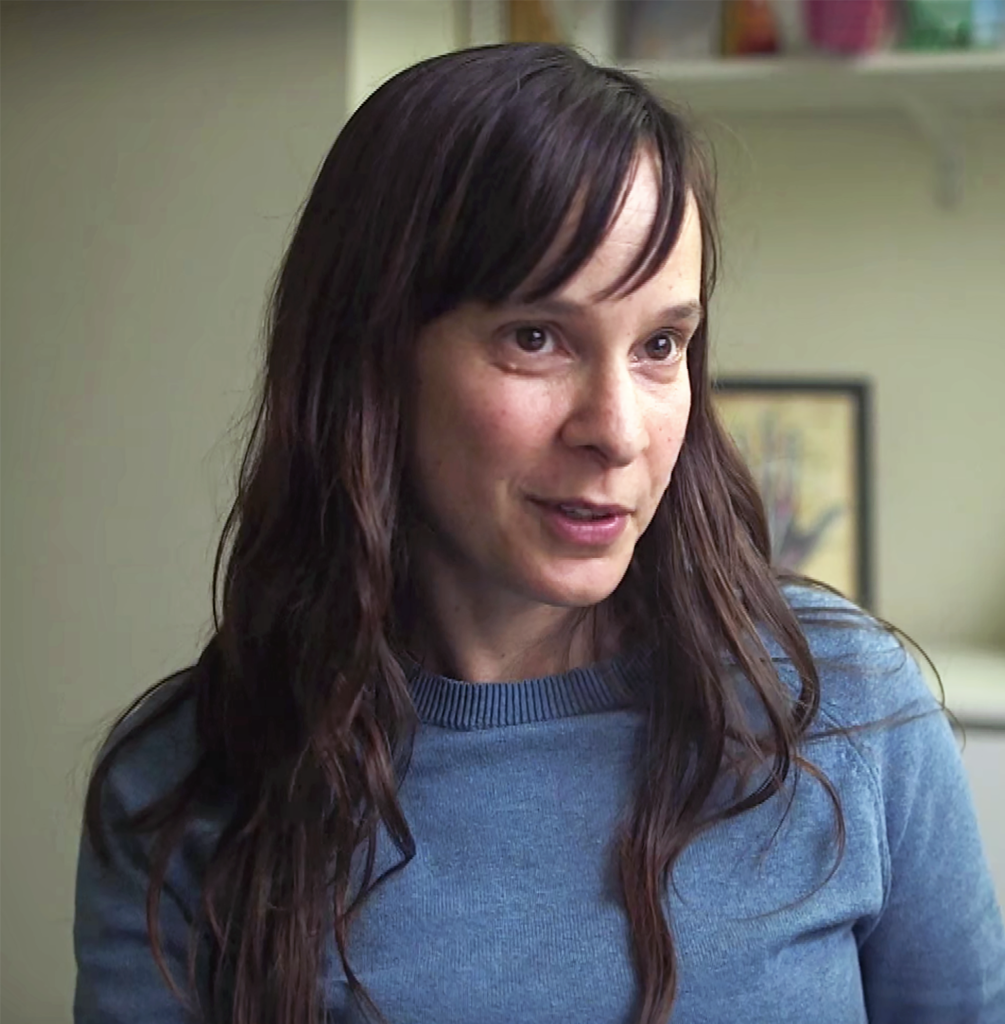
Tamar Makin
Abstract
As technologies increasingly extend into and onto our bodies, Human–Computer Interaction must reconsider what it means to design with the human body rather than simply for it. In this joint closing keynote, neuroscientist Tamar Makin and designer Dani Clode reflect on over seven years of close collaboration exploring bodily augmentation, prosthetic design, and brain plasticity. Drawing on neuroscience research with amputees and prosthesis users, alongside design-led provocations—from alternative prosthetic arms to Third Thumbs—they question assumptions about embodiment, extending the human form, and the primacy of the five-finger hand. Across neuroscience and design, they argue for a shift from imitating the biological body to working with it—designing for learning, adaptation, constraint, and connection over time. They show how our brains and bodies can support unfamiliar control schemes and non-biological forms, revealing new opportunities for technological interaction beyond biological imitation.
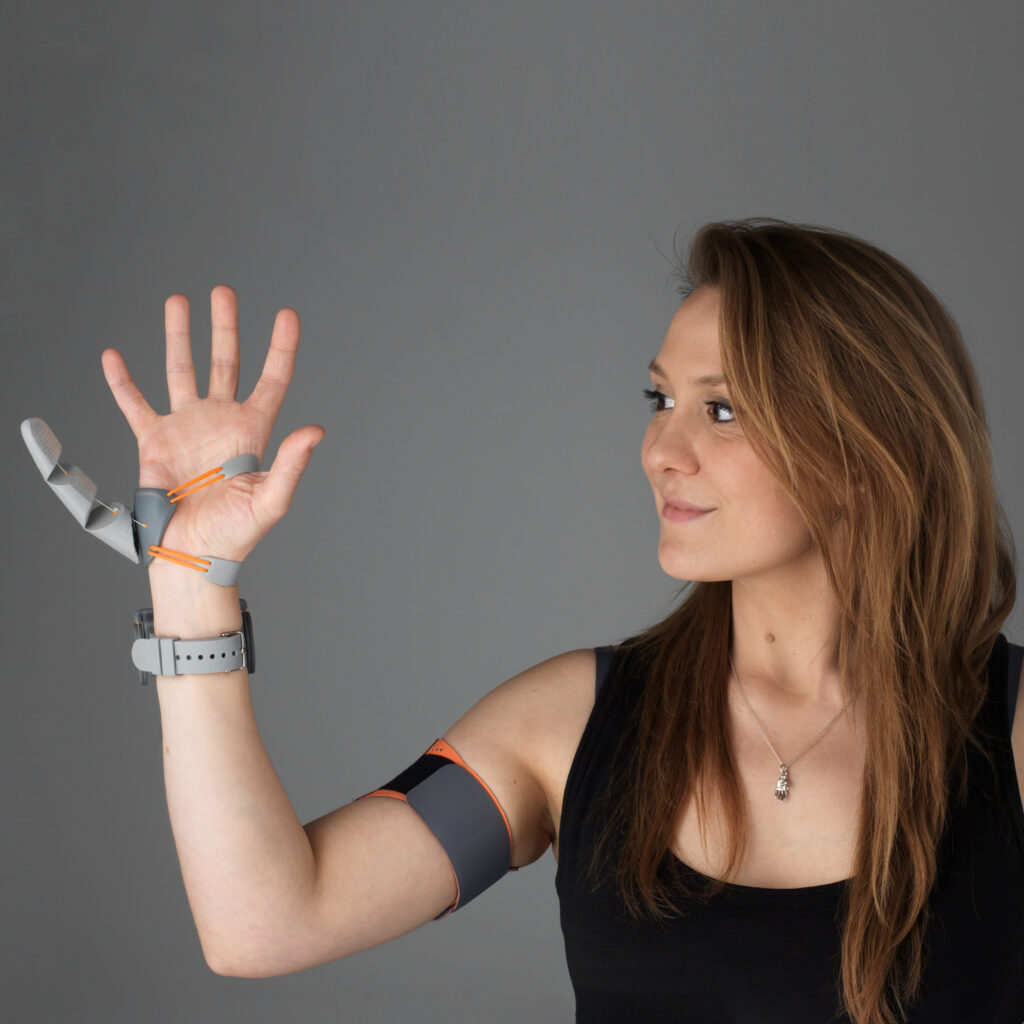
Dani Clode
Bios
Prof. Tamar Makin is a Professor of Cognitive Neuroscience at the University of Cambridge and the leader of the Plasticity Lab. She aims to understand how we can enhance motor functionality in able and disabled individuals at all ages. She is particularly interested in filling in the translational gap between the promise of technological breakthroughs and its societal impact in the realm of motor augmentation. Tamar was awarded several career development fellowships to establish her research programme on brain plasticity at the University of Oxford, first as Research Fellow (2009) and later as a Principle Investigator (2014). She joined the faculty of UCL in 2016 where she became a Professor of Cognitive Neuroscience (2019), and moved to Cambridge in 2022 to continue her work. She has been supported by the European Research Council (Starting and Consolidator Grants; deferred to UKRI), the Wellcome Trust (Henry Dale and Senior Research Fellow), the UK Engineering and Physical Sciences Research Council, in addition to the UK Medical Research Council.
Dani Clode is an award-winning designer working in human augmentation and upper-limb prosthetics, and the inventor of the Third Thumb. She is the Senior Technical Specialist in the Plasticity Lab at University of Cambridge, and co-founder of the augmentation design company Plectrum. Her work explores the future architecture of the human body, challenging how we define and extend the human form. Dani’s projects are internationally recognised, with five permanent museum installations, and her work has been featured in The Times, Forbes, Wired, PBS, NPR, Bloomberg, the BBC and The Economist. She is also the author of multiple scientific publications.